

I watched Cross of Fire the other night, and was inspired to write this post.
I do not watch regular TV or movies I look for the true stories. Marshall was another one. Stories I knew nothing about until I sat down with them, and then couldn’t stop thinking about for weeks. There’s a reason I keep going back to them, and I finally understand what it is. “They were nobody when they started. So was I.” I can keep going. JUSTICE will Prevail!!! Because it only takes the will to tell the truth, and stand for what is right!
In 1925, David Curtiss Stephenson was the most powerful man in Indiana. Grand Dragon of the Klan. A political machine of hundreds of thousands behind him, governor, legislature, judges, mayors, sheriffs. He said it out loud: I am the law in Indiana. And he was right. There was no institution left in that state that could touch him. I see many men today use those same words!
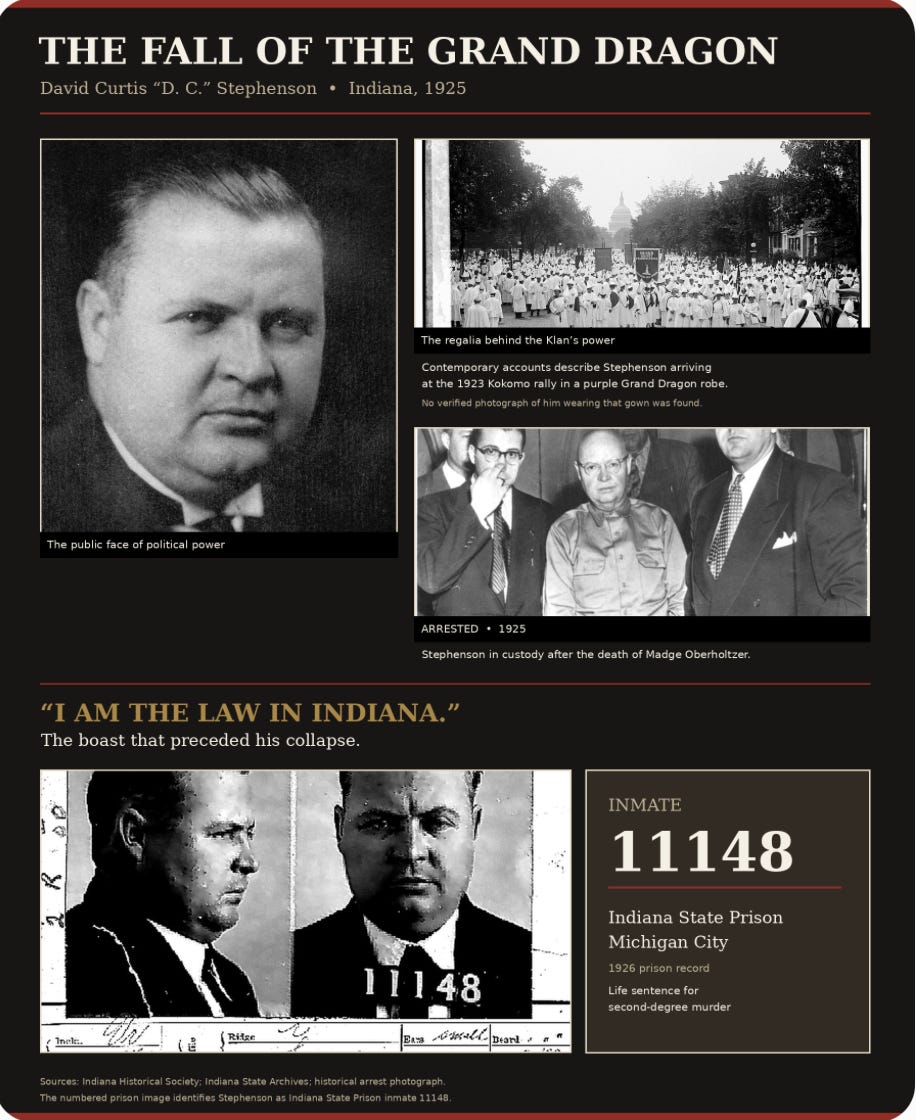
D. C. Stephenson A man who said, He is the Grand Dragon, He own Indiana was taken down by one man prosecutor was a young man named Will Remy
Then he assaulted a twenty-eight-year-old woman named Madge Oberholtzer, and she died. I’m going to tell you what he did, because softening it is how men like this keep their reputations for a hundred years.
Stephenson had built the whole empire selling himself as the protector of decent womanhood. Temperance. Clean living. Law and order. He rolled into one town after another like a knight in shining armor, waving money around, selling memberships at ten dollars a head and pocketing most of it, while the organization he led drove Black families, Catholics, Jews and immigrants out of their homes, their jobs, and their towns, and worse than that in places where it could get away with it.
In March of 1925 his men took Madge Oberholtzer from her home at gunpoint and put her on a train. In the compartment, he raped her. He beat her. He bit her — her face, her chest, her legs, down to her ankles — again and again, wounds a doctor would later have to count and describe one by one.
And when it was over, when she was torn and bleeding, he would not take her to a hospital.
Think about why. A hospital means a chart. A chart means a record. A record means a question he would have to answer.
She got hold of poison and swallowed it. He knew she had. He still wouldn’t get her a doctor, he offered to marry her instead. Then he had her carried into her parents’ house and left her on the doorstep of her own life.
She lasted about a month. The bite wounds went septic. Between the infection and the poison, her kidneys failed, and she died on the fourteenth of April, 1925.
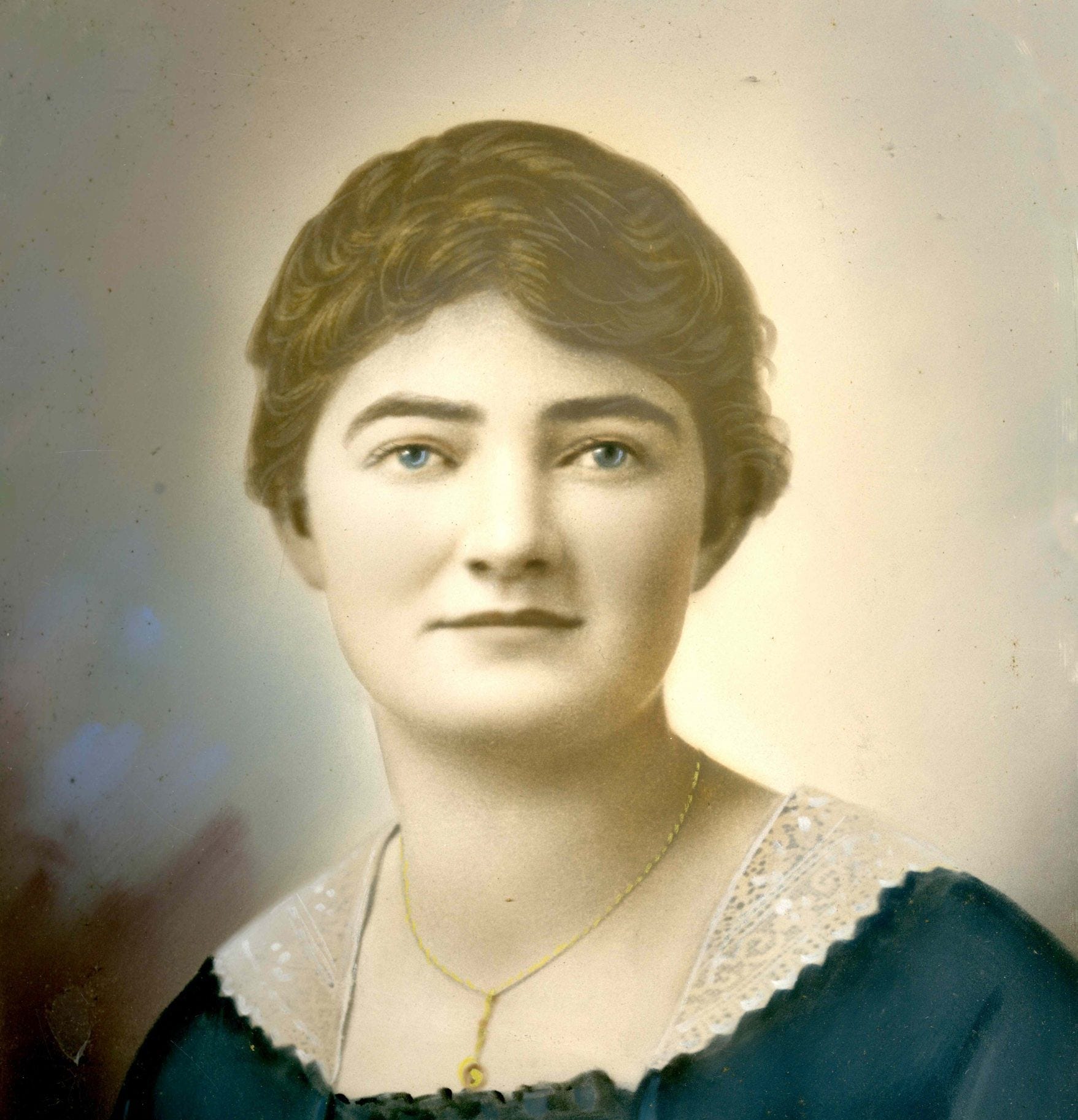
Beautiful Madge Oberholtzer. Image: Encyclopedia of Indianapolis.
Before she died, she talked. Weak, dying, in pain, she dictated a statement, what he did, in what order, what she saw, what she said, what he said back. A dying declaration. It was written down. It was signed. And a prosecutor put that piece of paper in front of a jury.
The prosecutor was a young man named Will Remy. Small, quiet, barely into his thirties. Stephenson had looked at him and decided he was nobody, too green, too unimportant to be a problem, not even worth buying. That was the miscalculation that ended him
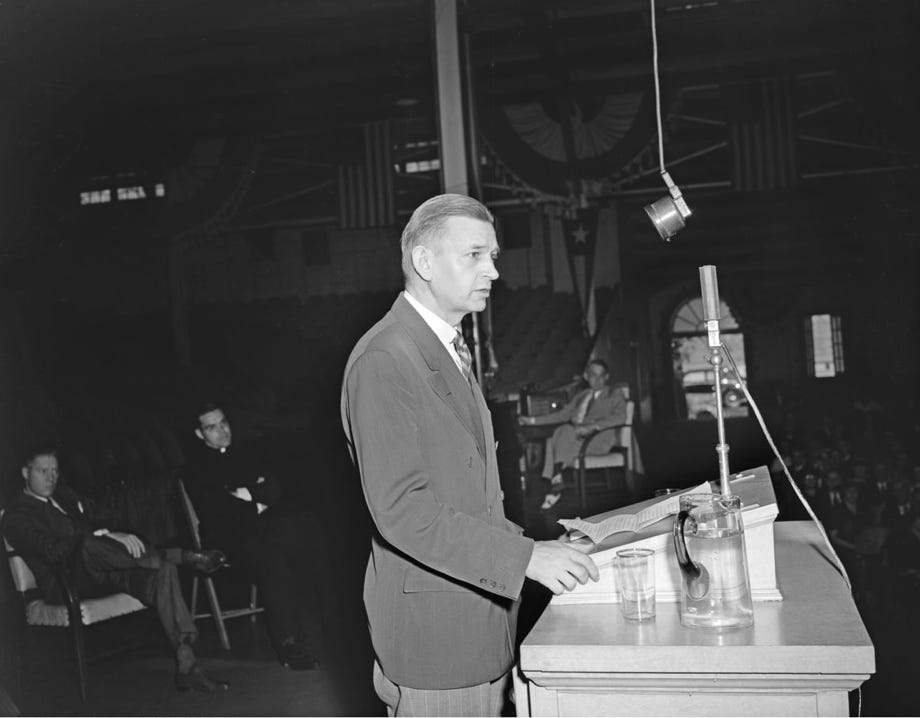
Prosecutor William H. “Will” Remy speaking at an America First Committee rally in Indianapolis, May 4, 1941. Photograph by Larry Foster. Courtesy of the Indiana Historical Society..
And understand why that piece of paper mattered so much. In law, what a person says outside a courtroom usually can’t be used, the other side has a right to cross-examine. But there is an exception, one of the oldest we have: the dying declaration. The law assumes that a person who knows they are dying has no reason left to lie. So Madge Oberholtzer, already gone by the time of trial, testified anyway. From the grave. And there was no cross-examining her.
Within two years the most powerful political machine in Indiana was gone.
Not undone by an army. Not by a movement. By one woman’s account of what was done to her body, written down while she still could.
Here’s the part that shook me, and it’s the part I want you to sit with.
The Klan of the 1920s wasn’t a gang of ignorant men in a swamp. Not in Indiana. It was doctors. Lawyers. Dentists. Ministers. Newspaper publishers. School board members. Men in good suits with framed diplomas who went to church on Sunday and believed, sincerely, that they were the respectable ones. The educated ones. The ones fit to decide.
On August 8, 1925, roughly forty thousand of them marched down Pennsylvania Avenue toward the Washington Monument. The Washington Post called it one of the greatest demonstrations the city had ever seen. And here is the detail I want you to hold onto: most of them marched with their faces uncovered.
They didn’t wear the masks. They didn’t need to. They weren’t hiding from their neighbors, because their neighbors were in the parade, or watching it, or writing about it in the paper the next morning. You only cover your face when you think the public will disagree with you. In 1925 they were certain it wouldn’t.
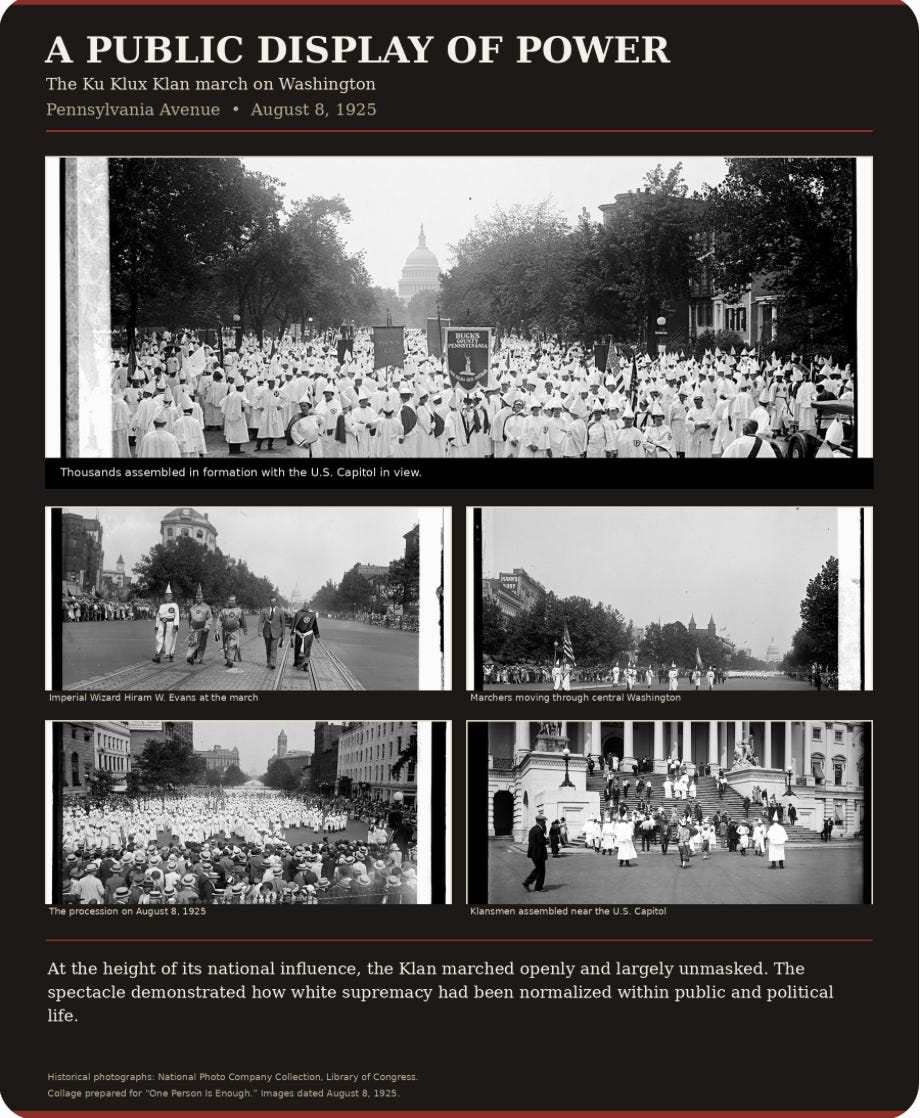
Ku Klux Klan parade on Pennsylvania Avenue, Washington, D.C., August 1925. Historical photograph reproduced by All That’s Interesting.
That’s the pattern. Every single time.
Two years after Stephenson’s trial, in 1927, the Supreme Court of the United States ruled that a young woman named Carrie Buck could be sterilized against her will. Eight to one. These were Harvard men. The finest legal minds in the country. Justice Holmes wrote that three generations of imbeciles were enough. Carrie Buck was not an imbecile. She had been raped, and her family was poor, and that was sufficient.
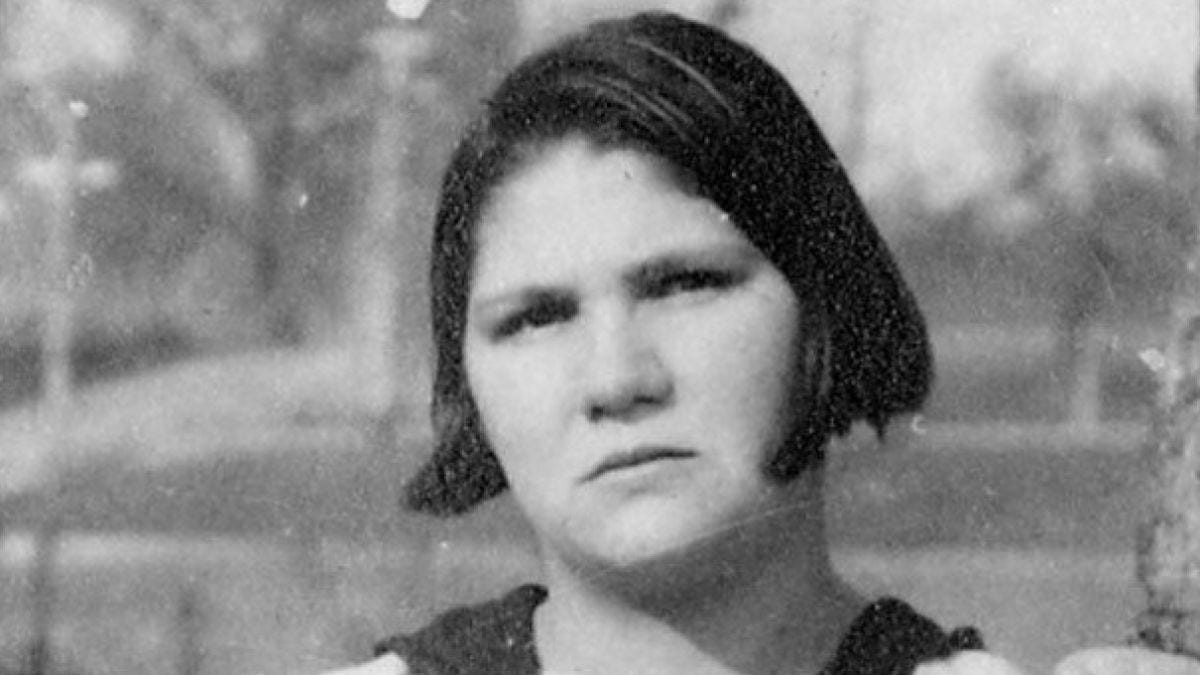
Carrie Buck in 1924. Historical photograph from the Arthur Estabrook papers, reproduced by Psychology Today.
More than sixty thousand Americans were sterilized under laws that decision protected. And when the German lawyers stood trial at Nuremberg, they pointed at us. They said they had read our statutes. They had.
Nobody in that story wore a hood. They wore robes and white coats and had letters after their names.
I want to be careful here, because I’ve learned that being right isn’t enough you have to be precise, or people will use your imprecision to throw out everything else you said. So I’m not going to tell you one thing is the same as another thing. I’m going to tell you what the pattern is, and let you look at it yourself.
The pattern is this: a credentialed class decides that some lives are a category rather than a person, and then builds a system where no one is accountable for what happens to that category. Not evil men cackling. Ordinary professionals, following the protocol, certain they’re the good ones, protected from consequence.
Medicine’s own history is full of it.
Ignaz Semmelweis figured out in 1847 that if doctors washed their hands between the autopsy room and the delivery room, mothers stopped dying. He had the numbers. He showed them the numbers. The medical establishment — educated men, every one — ridiculed him, drove him out, and destroyed him. He died in an asylum. Women kept dying for another twenty years while the profession protected its dignity.
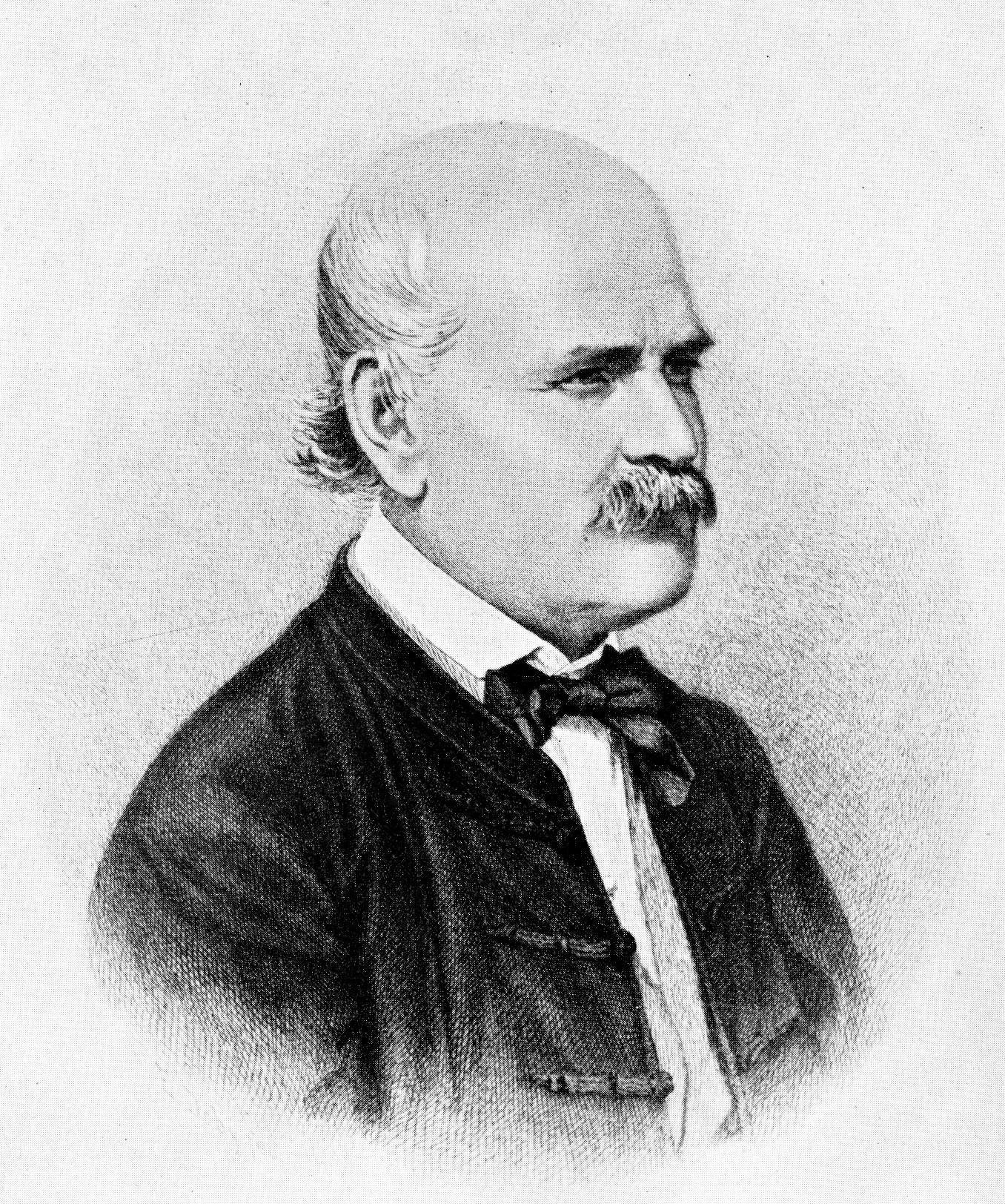
Ignaz Semmelweis. Public-domain portrait via Wikimedia Commons.
At Tuskegee, the United States Public Health Service watched hundreds of Black men go untreated for syphilis for forty years. Forty. Doctors did that. Nurses did that. It ended in 1972 because one employee named Peter Buxtun could not live with it and went to a reporter. One man.
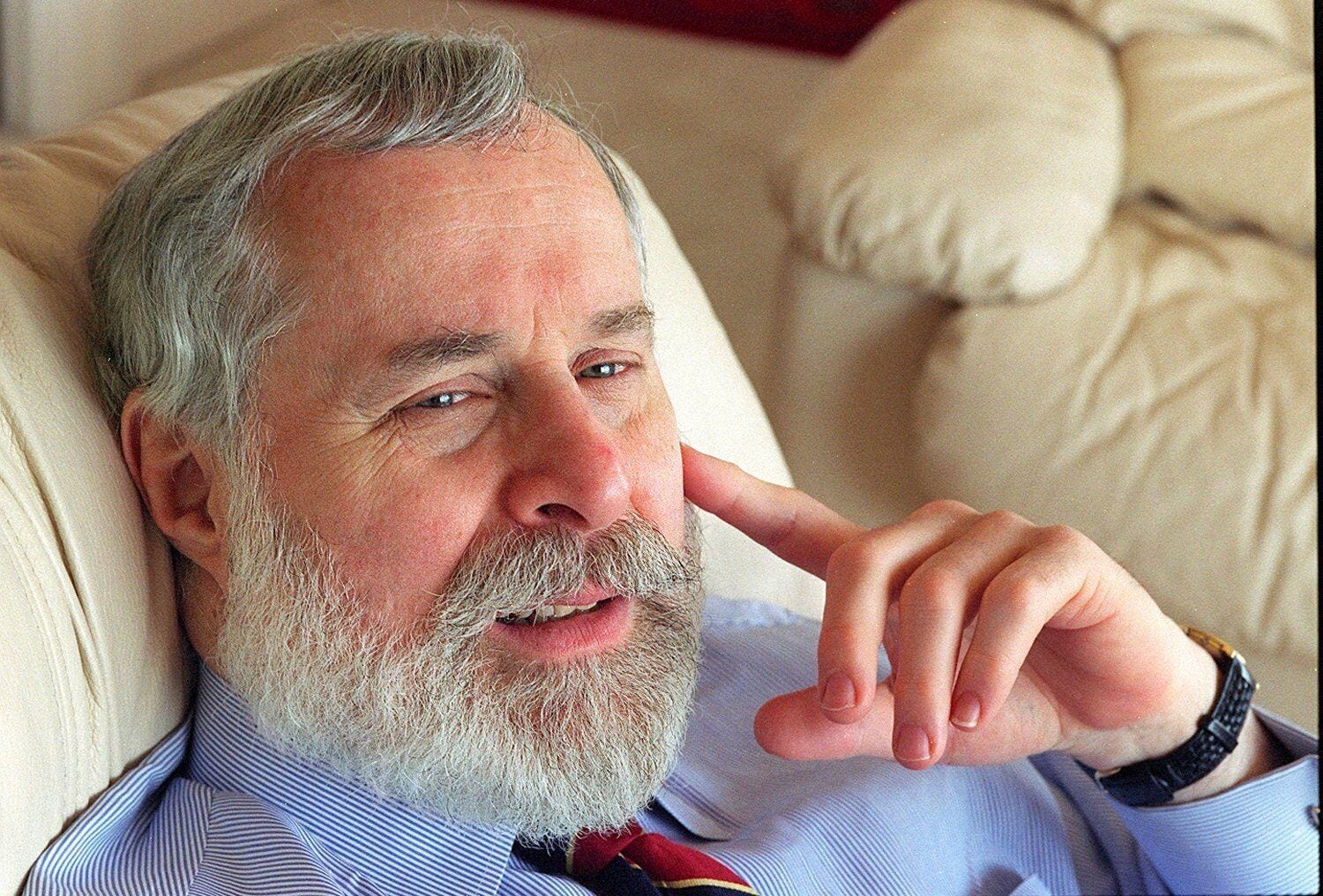
Peter Buxtun, the whistleblower whose disclosures helped end the Tuskegee syphilis study. Image: Johns Hopkins Berman Institute of Bioethics.
Thalidomide never got into American pregnancies because one reviewer at the FDA, Frances Kelsey, refused to sign off while the company leaned on her. One woman, holding a line, against everyone.

Dr. Frances Oldham Kelsey at the FDA. U.S. Food and Drug Administration photograph; public domain via Wikimedia Commons_(8211251003).jpg).
Wangari Maathai was beaten and jailed in Kenya for planting trees and telling the truth about who was stealing the land. Leymah Gbowee gathered women in a fish market in Liberia and would not leave until the killing stopped. Thurgood Marshall drove from town to town, alone, in a country where a Black lawyer could be killed for winning.
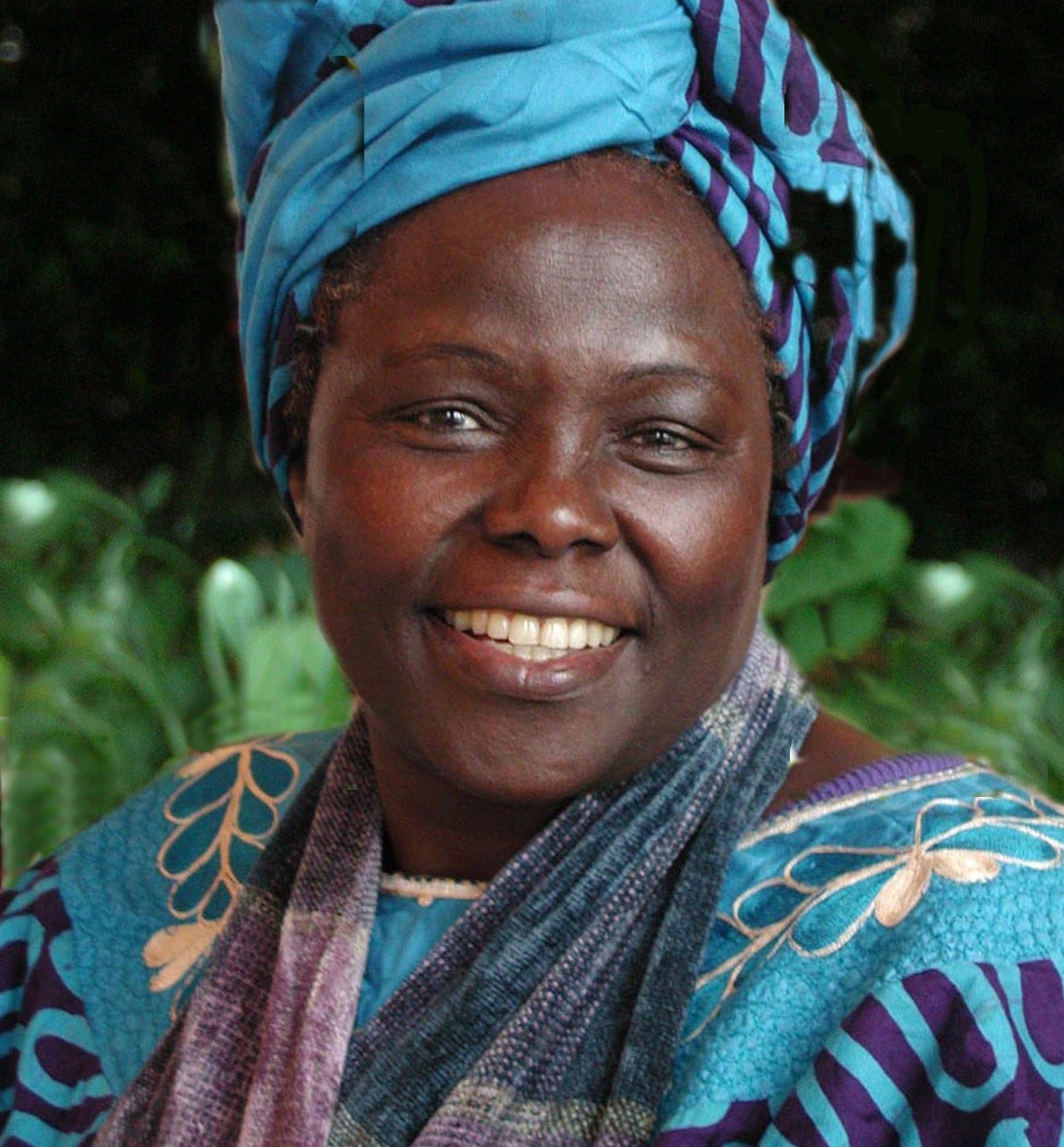
Wangari Maathai. Image: Artips.

Leymah Gbowee. Image: University of Nebraska–Lincoln.
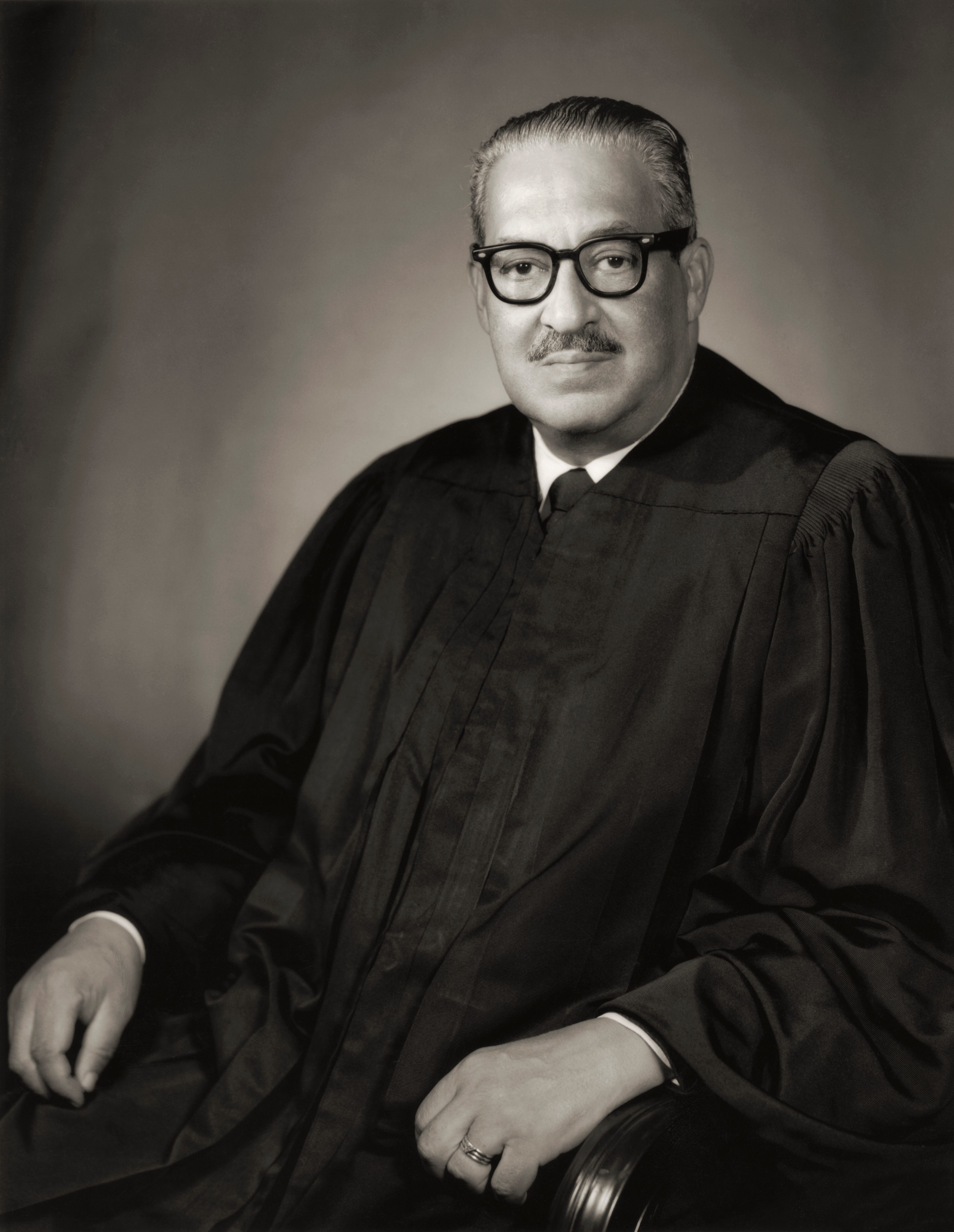
Thurgood Marshall. Historical portrait reproduced by Biography.
And it is never.. never…the powerful who stop it.
Ida B. Wells was born into slavery. When a white mob murdered her friend in Memphis in 1892, she did the one thing nobody expected: she started keeping records. Names. Dates. Places. The accusation, and then the truth behind the accusation, pulled from the white newspapers’ own pages. She published it. They burned her press and ran her out of the city, and she kept publishing. She didn’t argue about lynching in the abstract. She made it specific, and specific is what they could not survive.
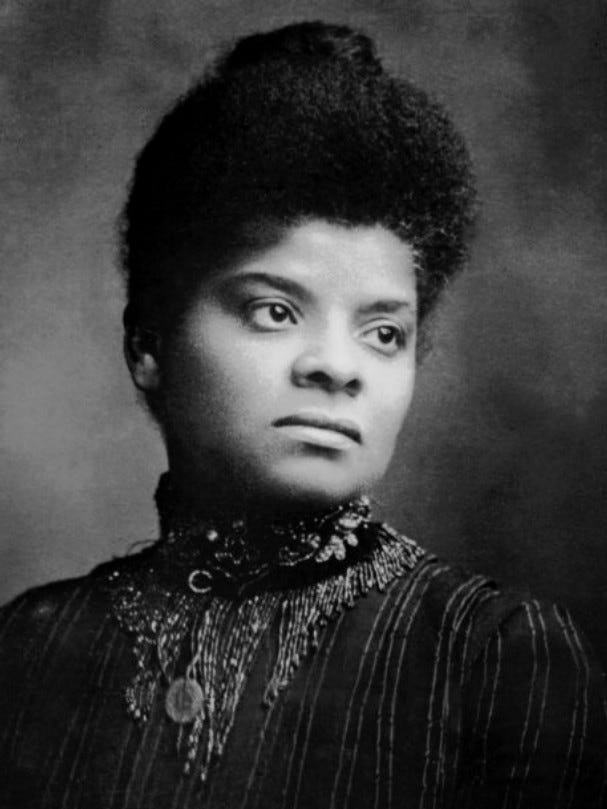
Ida B. Wells. Public-domain portrait via Wikimedia Commons.
Fannie Lou Hamer picked cotton in Sunflower County, Mississippi. In 1961 she went into a hospital to have a tumor removed and came out sterilized — no consent, no conversation, nobody asked. It was so common in that state that people had a name for it. Then in 1964 she sat down in front of the Democratic Party’s credentials committee and described, plainly, what had been done to her and what happened when she tried to register to vote. The President of the United States called an emergency press conference to knock her off the air. It worked for about six hours. The networks ran her testimony in full that night, and the country heard a sharecropper who could not be argued with.
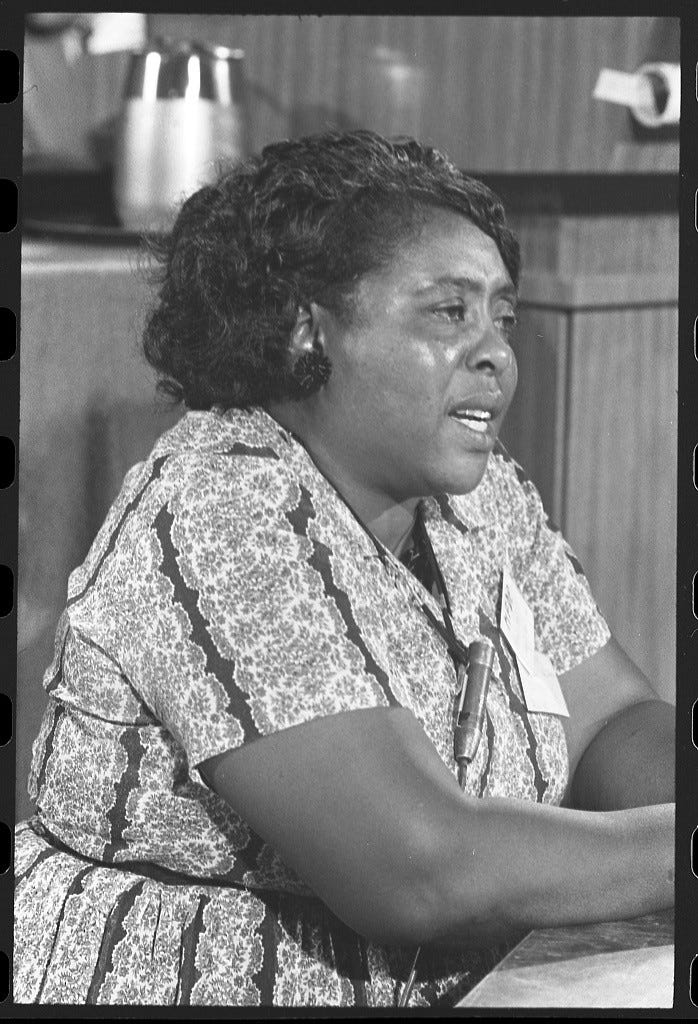
Fannie Lou Hamer at the 1964 Democratic National Convention. Photograph by Warren K. Leffler, Library of Congress. No known restrictions on publication.
Bhimrao Ambedkar was born untouchable in India — made to sit outside the classroom, forbidden to drink from the common cup. He became one of the most educated men of his generation and then chaired the committee that wrote India’s Constitution, and he wrote the abolition of untouchability into it with his own hands.
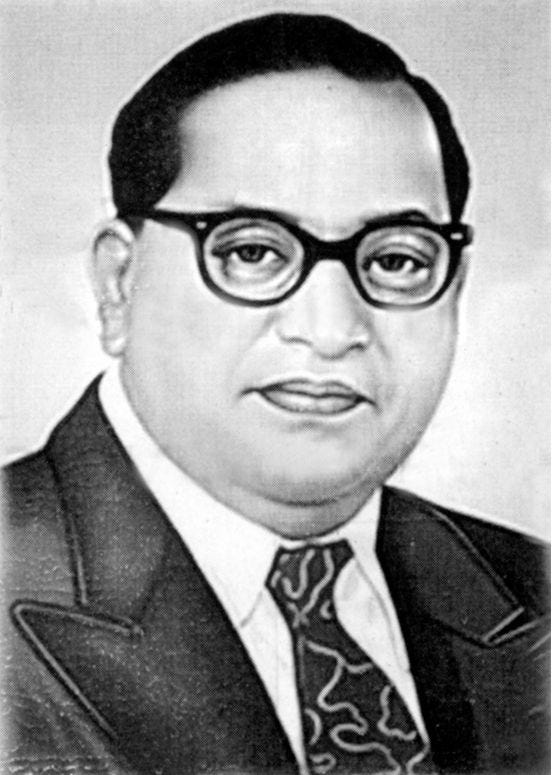
Dr. Bhimrao Ramji Ambedkar. Image: Indian National Congress.
Gandhi walked two hundred and forty miles to the sea and picked up a handful of salt. That was it. That was the whole act. An empire that spanned a quarter of the earth had made it a crime for an Indian to gather salt from an Indian shore, and one man in a loincloth bent down and picked some up, and the moral case for the whole arrangement never recovered.
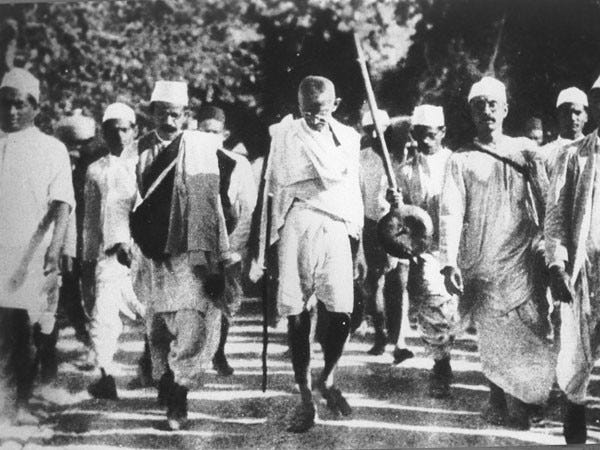
Mahatma Gandhi during the 1930 Salt March. Historical photograph reproduced by CareerIndia.
Irom Sharmila stopped eating in Manipur in 2000 after soldiers killed ten civilians at a bus stop. The state force-fed her through a tube in her nose for sixteen years rather than repeal the law she was protesting. Sixteen years. One woman.
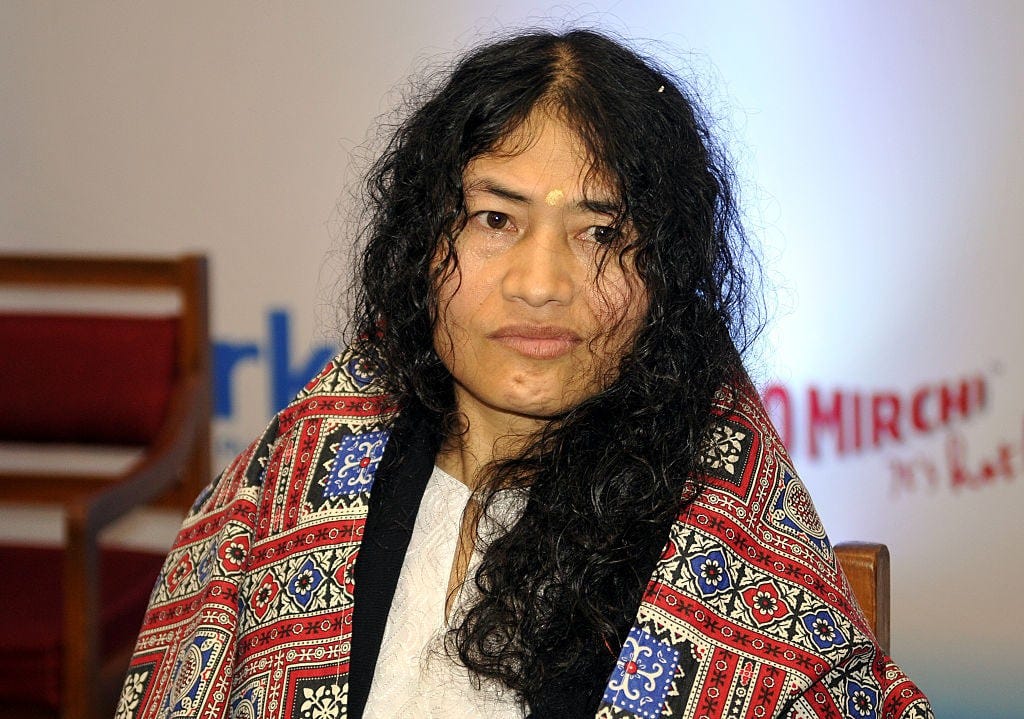
Irom Sharmila. Image: National Herald India.
Steve Biko died in a South African police cell in 1977. And here is the part that stops my breath: doctors examined him. Physicians looked at a shackled, brain-injured man, wrote what they wrote, and let him be driven seven hundred miles in the back of a van to die on a stone floor. The first inquest found nobody responsible. It took an editor smuggling photographs of his body out of the country, and then years more, before the medical establishment was forced to discipline its own. Doctors. Notes in a file. A dead young man and a record that didn’t match him.
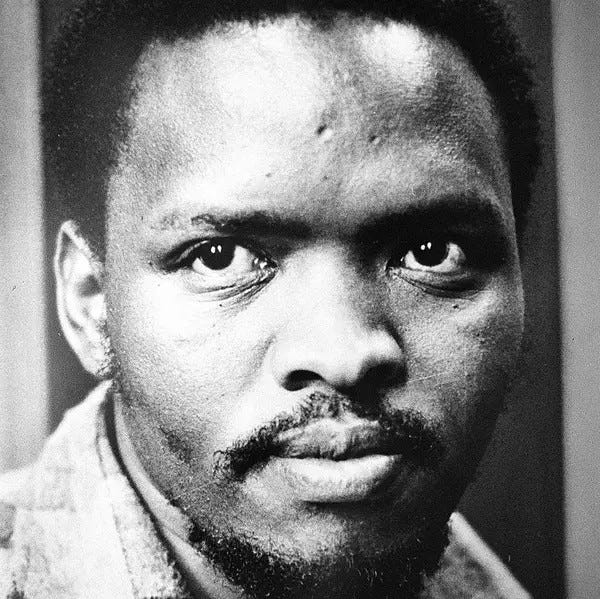
Steve Biko. Historical photograph reproduced by BET.
Ken Saro-Wiwa was a writer in Nigeria who told the truth about what the oil companies were doing to Ogoniland, and they hanged him for it in 1995.
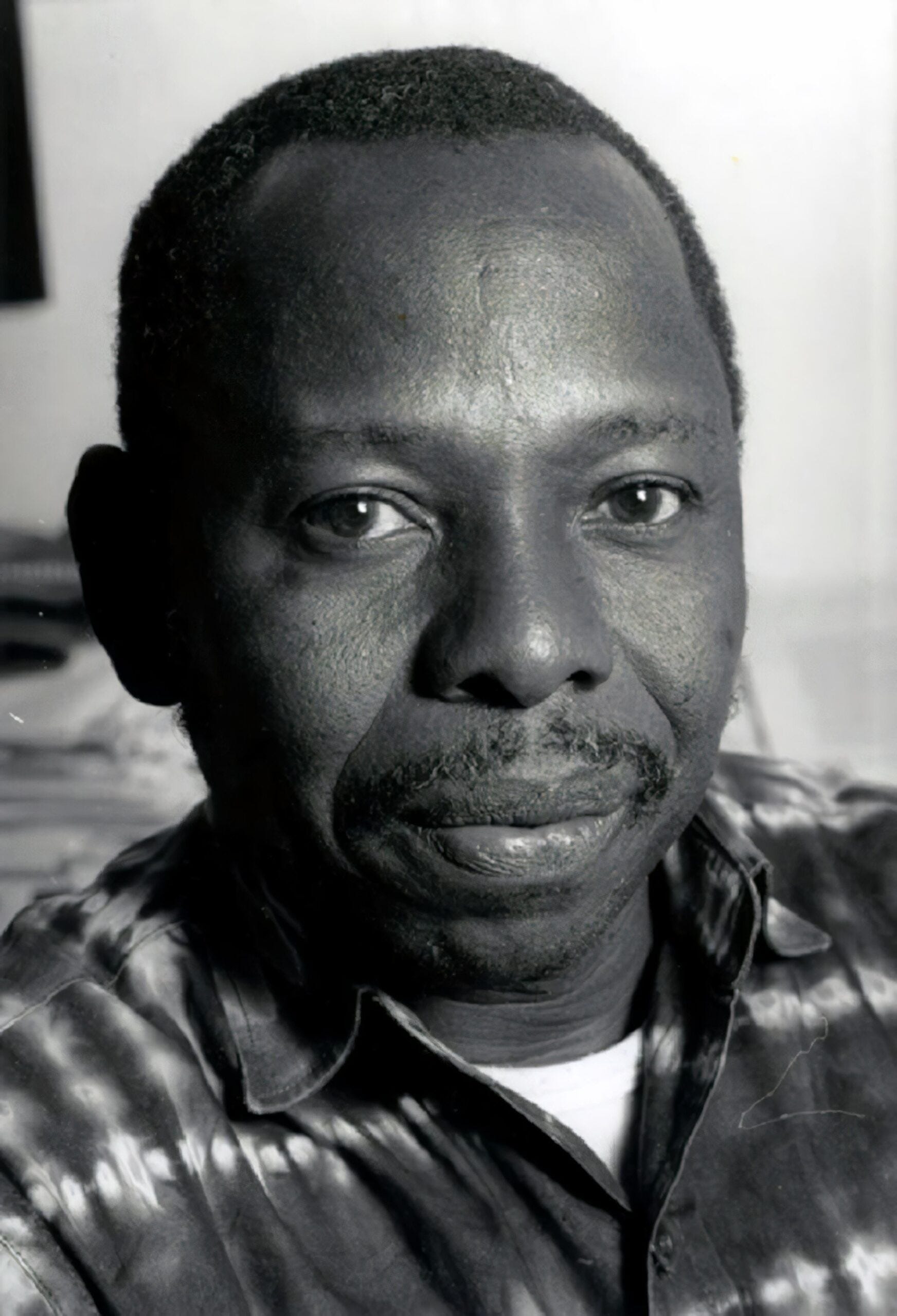
Ken Saro-Wiwa. Photograph credited to Amnesty International UK and reproduced by Open Country Mag.
Sophie Scholl was twenty-one years old, a student in Munich, handing out leaflets. The Nazis beheaded her four days after they caught her. Four days. She had no army either.
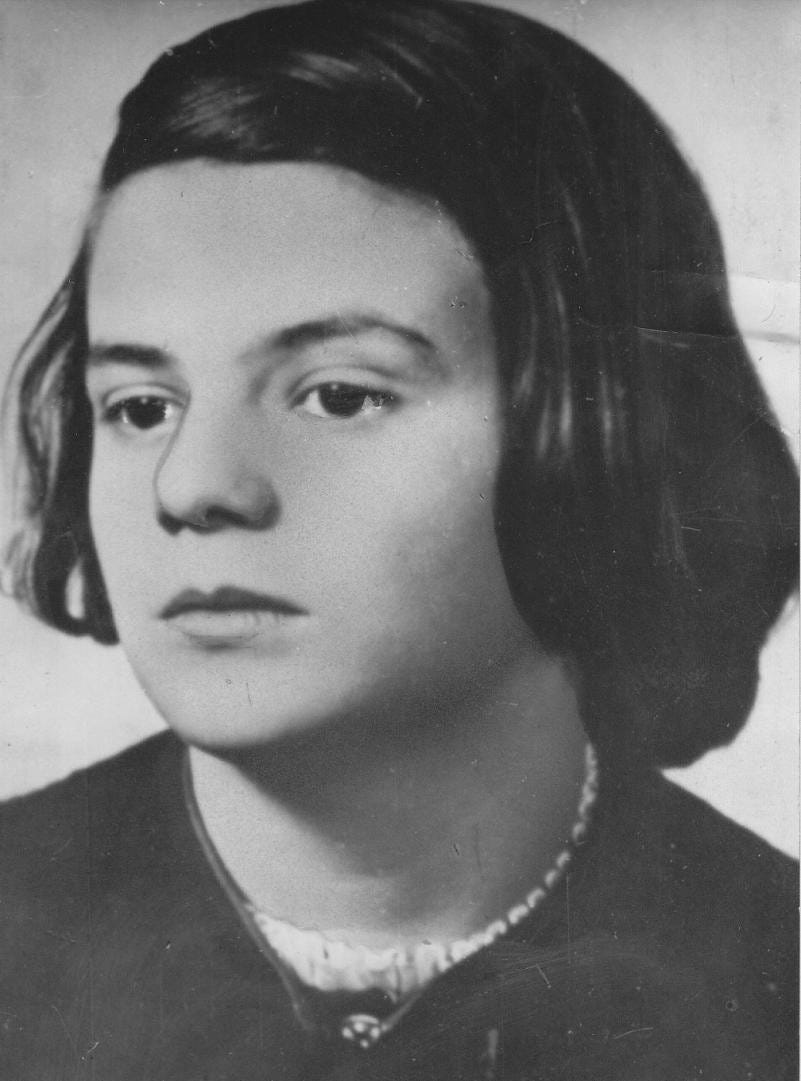
Sophie Scholl. Image: German Federal Archives.
Aleksandr Solzhenitsyn collected the accounts of more than two hundred prisoners and assembled them into a record so precise that a superpower could not answer it. They didn’t refute him. They couldn’t. They just put him on a plane and threw him out of the country.
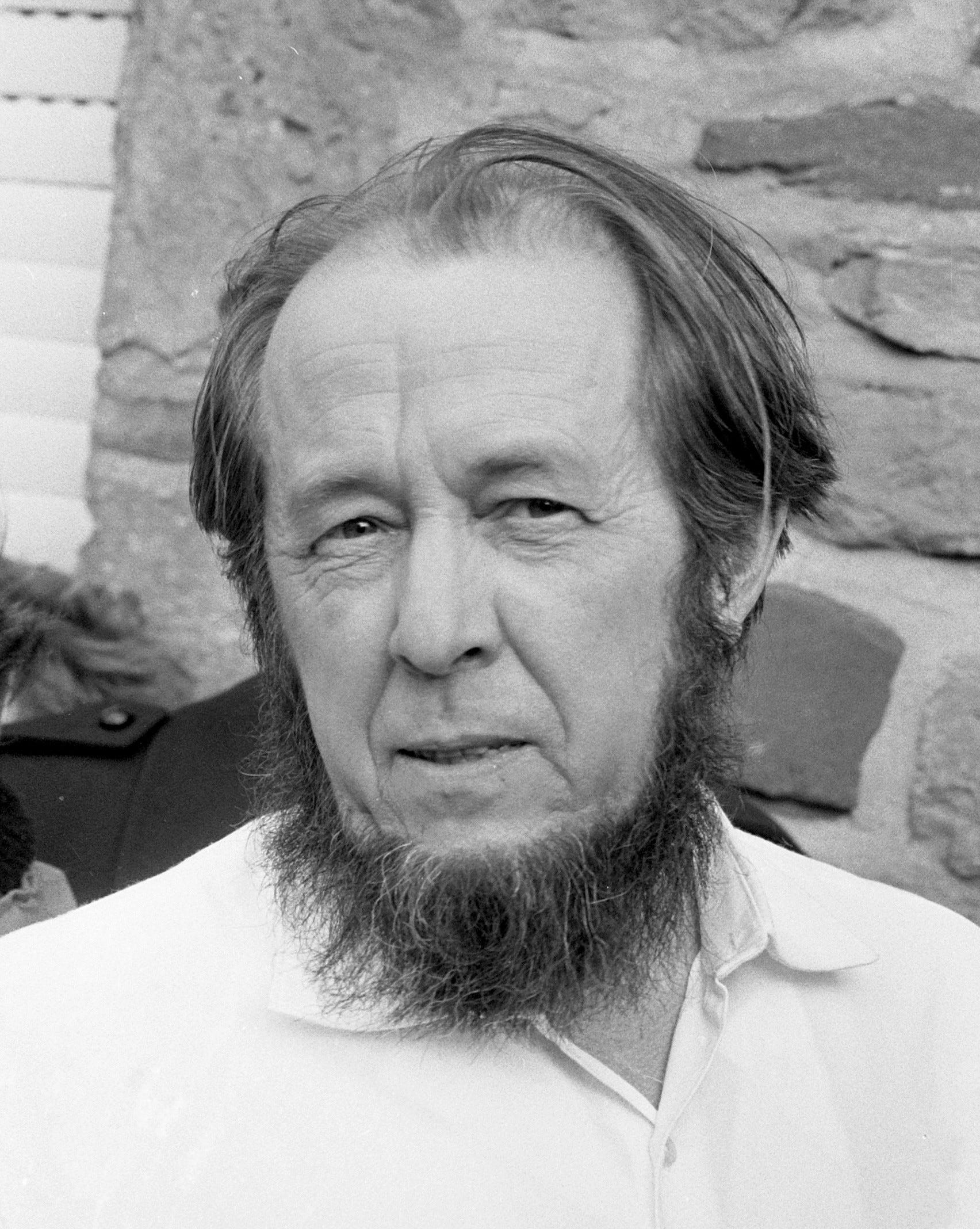
Aleksandr Solzhenitsyn in 1974. Historical photograph via Ruwiki/Wikimedia Commons.
And here’s what I keep coming back to: almost none of these were famous when it counted. Most of them were nobody. That’s not a sad footnote, that’s the mechanism.
On the 21st of March, 1960, people in a South African township called Sharpeville walked to the police station without weapons to protest the pass laws — the papers a Black person had to carry to exist in their own country. The police opened fire. Sixty-nine died. Most were shot in the back, running. Not soldiers. Not leaders. Men and women who had decided that morning that they were done carrying the papers.
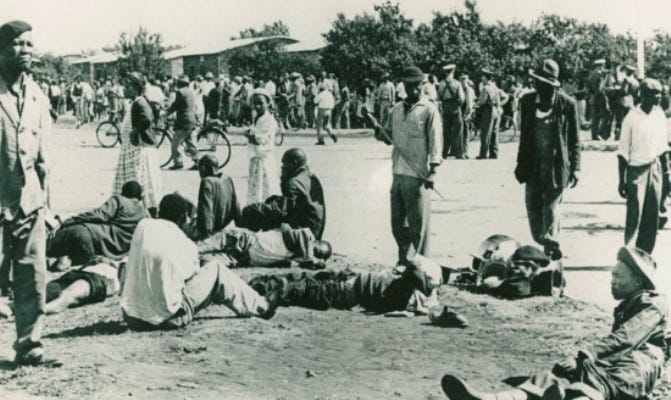
The aftermath of the Sharpeville massacre. Image: South African History Archive.
Sixteen years later, in June 1976, the children of Soweto walked out of their schools because the government had decided they would be taught in Afrikaans. Children. The police shot into them. A twelve-year-old boy named Hector Pieterson was carried out of that street by another teenager, and a photographer named Sam Nzima took the picture, and that picture went around the world and apartheid never got its reputation back. A twelve-year-old. He had no plan to change history. He went to school.
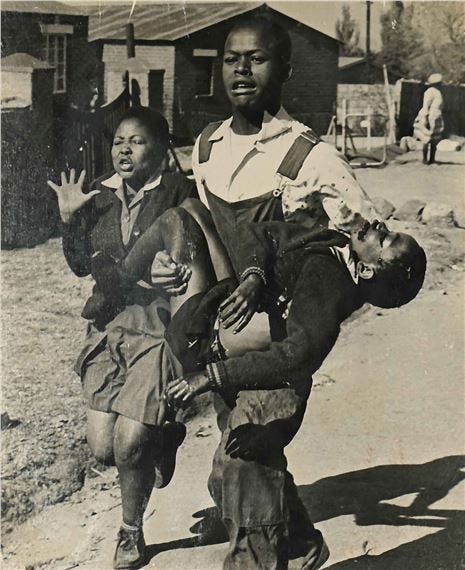
Hector Pieterson is carried by Mbuyisa Makhubo as Antoinette Sithole runs beside them during the Soweto uprising. Photograph by Sam Nzima; image reproduced by MutualArt.
In May 1930, at the Dharasana salt works in India, unarmed volunteers walked forward in columns toward the police line. They were clubbed down. The next column stepped over them and walked forward. Then the next. Hour after hour, and not one of them raised an arm to defend himself. A reporter named Webb Miller counted the bodies going into the makeshift hospital and cabled the story out, and the world read it and understood what the British Empire actually was.
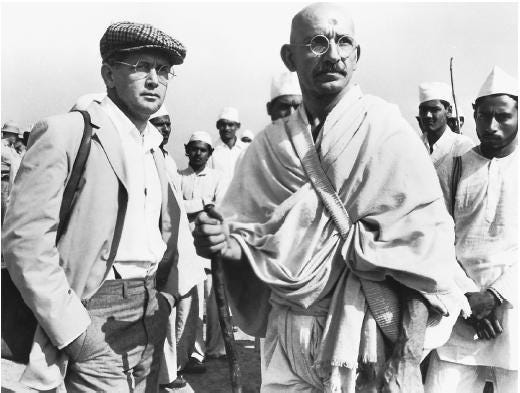
Reporter Webb Miller with Gandhi during the Salt Satyagraha. Historical photograph reproduced by IndeBo.
And in 2013 — think about this one — five elderly Kenyans in their seventies and eighties, farmers and laborers who had been tortured in British detention camps during the Mau Mau emergency, won against the government of the United Kingdom. Do you know what won it? Files. Thousands of colonial records the British had hidden away in a warehouse for fifty years, which surfaced only because of the litigation. Old people who had waited half a century, and a stack of documents that finally said what everyone had denied. Nearly six thousand claimants compensated.
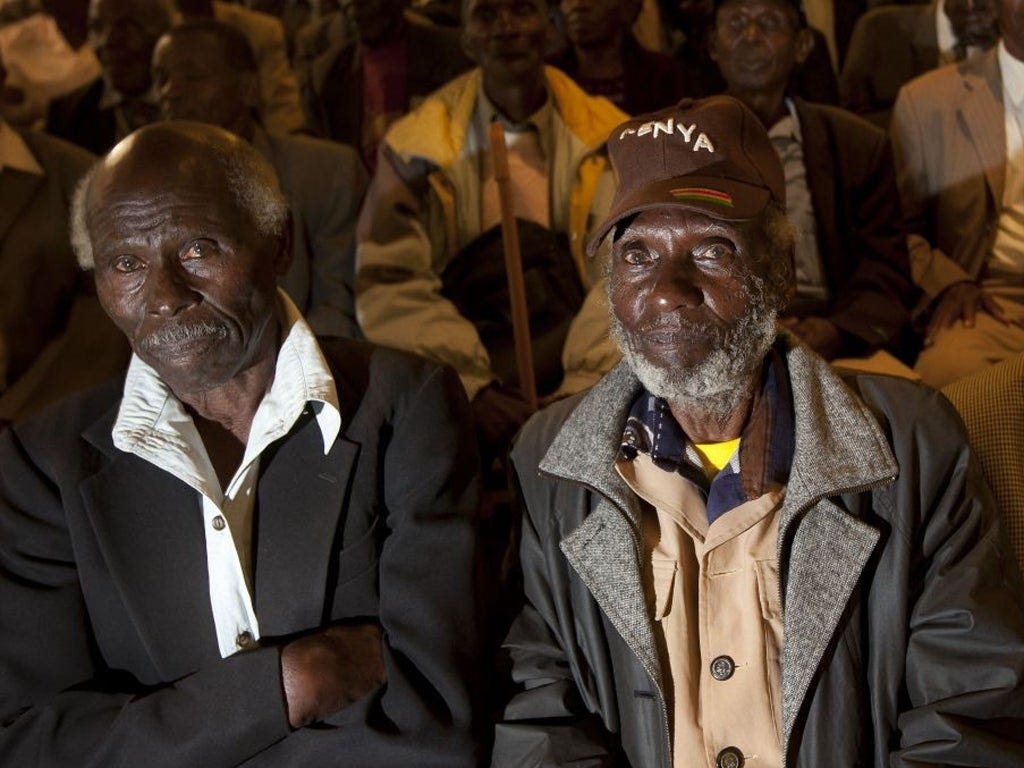
Kenyan Mau Mau veterans in 2013. Associated Press photograph reproduced by The Independent.
Fifty years. They didn’t stop. And the records were the thing.
And I’ll say this plainly, because it matters to me: some of the ones who stood were ministers, and some were the opposite. It was ordained men who built the theology that justified apartheid, and ordained men who mostly kept quiet in Germany. But Beyers Naudé stood in his own Dutch Reformed pulpit and told his own people apartheid could not be defended from Scripture, and they took his congregation and banned him for seven years. Archbishop Janani Luwum hand-delivered a written protest to Idi Amin with his name on it and was dead within days. The collar is no protection from the pattern. It’s what the person does that counts.
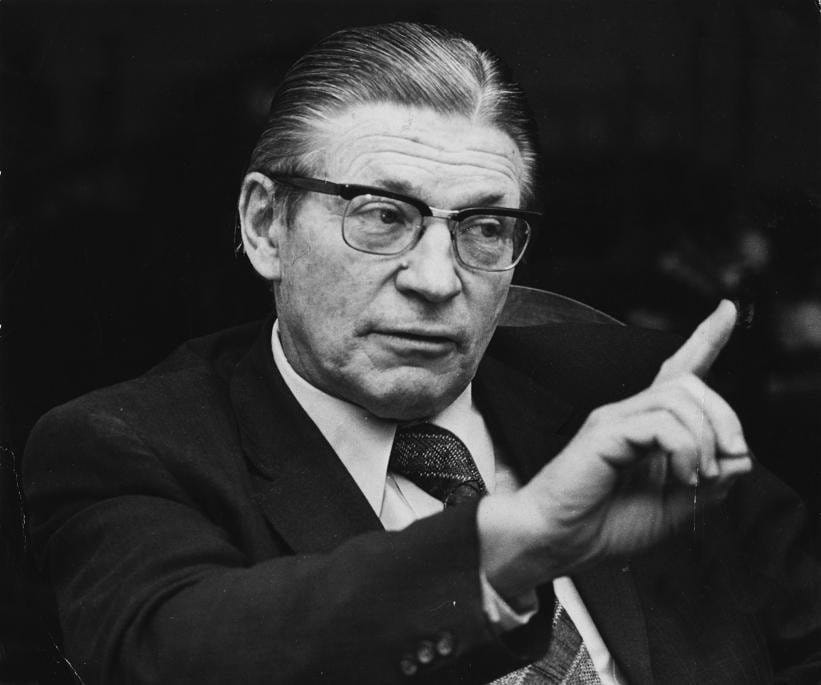
Beyers Naudé in 1974. Historical photograph reproduced by Netwerk24.
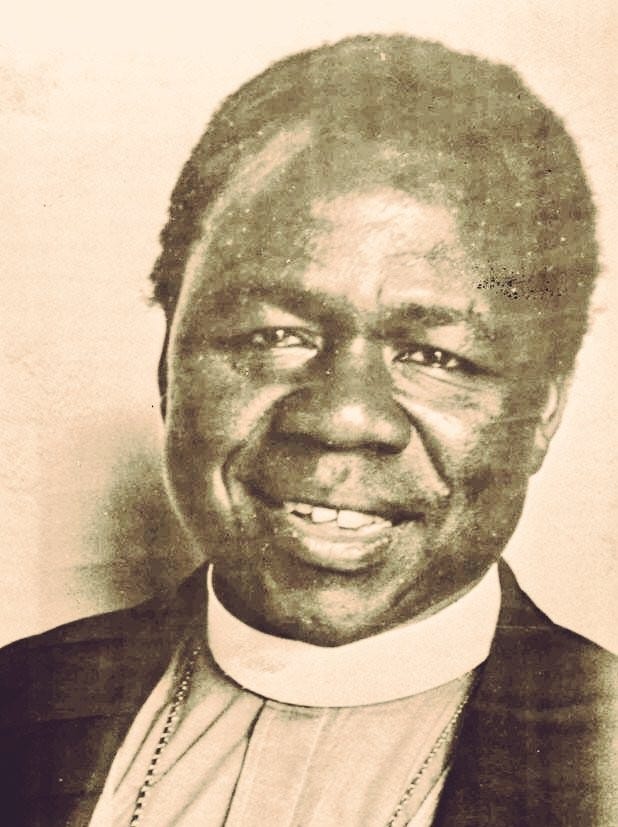
Archbishop Janani Luwum. Historical portrait reproduced by the Uganda National Roads Authority.
Not one of these people had power when they started. Not one. Some of them died. Most of them were called liars first. Every last one of them was told, by reasonable people, that they could not possibly make a difference.
There is a step that has to happen first, before any of it is possible. It happens in the eyes.
No system can destroy a person while it still sees a person. So the seeing has to go first. The name becomes a number. The patient becomes a case. The child becomes a category, a statistic, a bed, a protocol, a type — and once that conversion is complete, ordinary people will do things to that category they would never in their lives do to a face.
That’s the part nobody wants to admit. It isn’t monsters. Stephenson needed hundreds of thousands of neighbors to go along, and they did. Tuskegee needed forty years of staff who filed the paperwork and went home to dinner. It always takes a crowd of unremarkable, frightened, agreeable people who look away because looking is expensive and going along is free.
And what breaks it — every time, in every one of these stories — is somebody putting the face back.
That’s all a dying declaration is. It’s a woman refusing to be a category. It’s the specific, particular, irreducible record of what was done to this one human being, in this order, on these days. You cannot argue with it in the abstract, because it isn’t abstract. It has a name on it.
That is why they fight so hard to keep the records vague. And that’s why I read every page.
So when people tell me I can’t make a difference — and they do tell me — I already know the answer. History gave it to me. It is always one person. It’s the dying woman’s statement. It’s the clerk who won’t sign. It’s the man who calls the reporter. The empires are always bigger, always richer, always better credentialed, and they always fall the same way: someone writes down exactly what happened and refuses to take it back.
My daughter Danielle Cathleen Alvarez was twenty-eight years old. She spent forty-one days in that hospital and she did not come home.

Danielle Cathleen Alvarez, with Ritzy. 2019.
Madge Oberholtzer was twenty-eight years old.
I didn’t go looking for that. I was halfway through the film when they said her age, and I had to stop it and sit in the dark for a while.
A hundred years apart. Two young women the world had decided it could afford to lose. And in both cases, what’s left is a record, and a fight over what that record is allowed to say.
I have her record. All of it, thirteen reams, six thousand one hundred and thirty-two certified pages. I have read them. Not skimmed. Read them, page image by page image, because I made myself a rule at the beginning: nothing goes in a filing, nothing goes in a post, nothing comes out of my mouth in public unless I can put my finger on the page it came from.
What’s in those pages will be tested where it belongs — under oath, on the record, by lawyers, in front of a judge. That’s coming. Soon. And I’m not going to try that case here in a newsletter, because Danielle deserves better than that and so do you.
But I’ll tell you what I’ve learned holding those pages: the system that produced them was built the same way every one of these systems is built. Protocol over person. Category over child.
And underneath all of it, the thing that makes it possible every single time — the settled, comfortable, unexamined confidence that no one would ever have to answer for any of it.
That’s the part they always get wrong.
I’m not backing down. Not because I’m strong… most days I’m not okay. Because I know Who holds her, and I know what one written account of what was done to one person has done to empires before.
Madge Oberholtzer was dying and she told them anyway.
I’m still here. So I’ll tell them too.
In faith and fierce love,
Rebecca Danielle’s mom. Forever.
[DONATE] 💵 $5 funds pages of expert record review. 💵 $500 funds a deposition transcript. 💵 $5,000 funds an entire expert report. This fight is won by many hands, not deep pockets.
Stand With Us
👉 Donate (tax-deductible) freenowfoundation.app.neoncrm.com/forms/28
Write Danielle’ s name in the memo box.
👉 Donate on GiveSendGo: givesendgo.com/JusticeforDanielle
👉 Danielle’s story: justiceforsweetdanielle.com
Checks: Free Now Foundation, 50 Woodside Plaza, Suite #417, Redwood City, CA 94061 — Memo: Danielle
If you cannot give, share this. Thank you for reading my post and being a part of Justice for Danielle.